Plenty
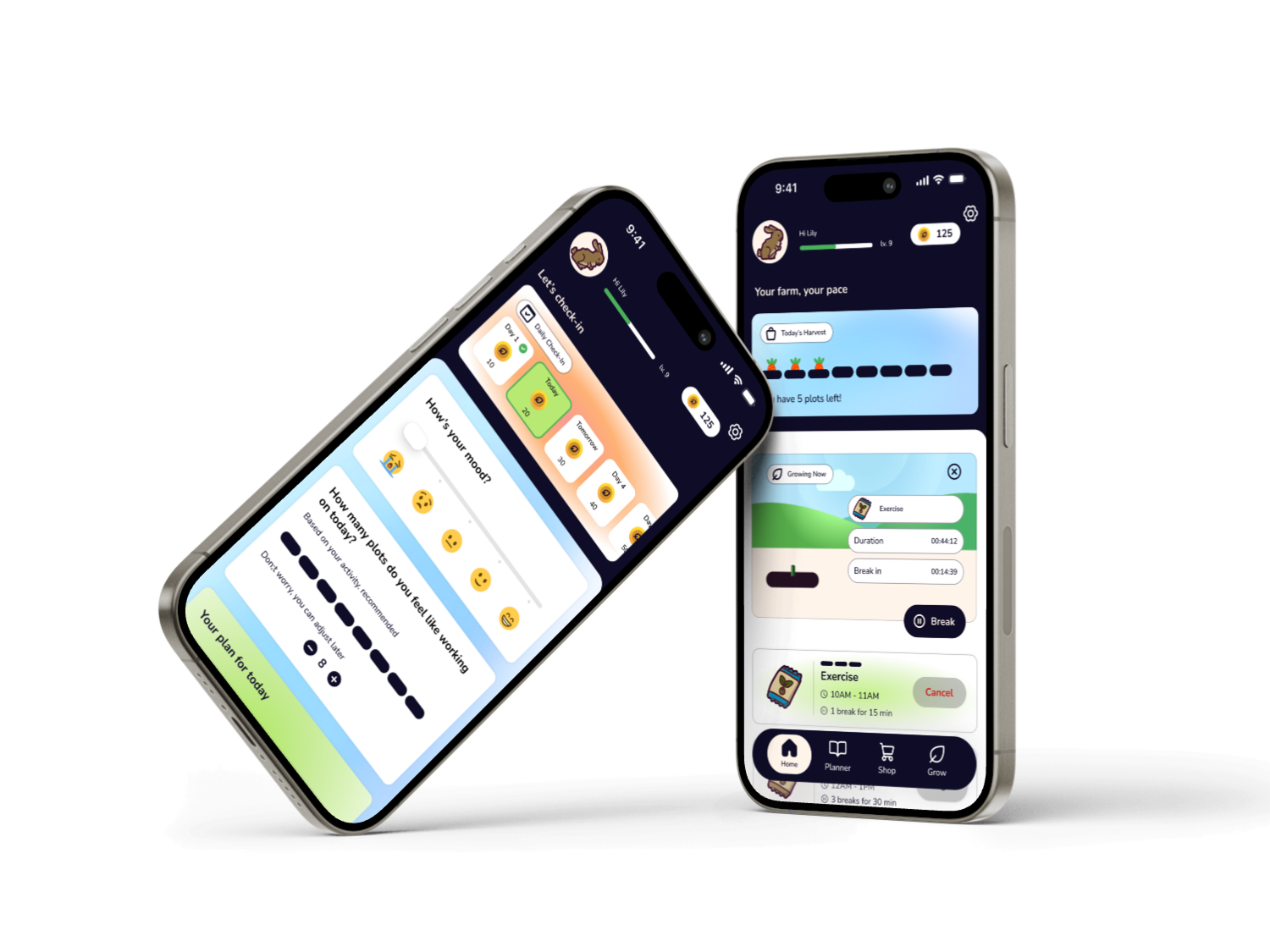
Gamified productivity app for neurodivergent individuals.
Case study.
My Role
Product Design
UX Research & Strategy
Tools
Figma
After Effects
Timeline
2 months
Problem
Neurodivergent individuals, particularly those with ADHD, experience a boom-or-bust cycle—intense hyper-focus followed by complete burnout. While productivity tools exist on the market, they often fall short in providing the personalization and visual feedback needed to help users pace themselves, leaving them vulnerable to repeated exhaustion.
Recognising this gap, the project aimed to help neurodivergent users regain control of their energy management through a system that makes the invisible visible.
Research
Understanding how neurodivergent individuals experience and manage burnout required deep empathy and nuanced investigation. Through interviews, surveys, and literature review, the research uncovered critical patterns in how neurodivergent users experience energy depletion and productivity cycles.
Core Insights
The invisible
Neurodivergent individuals struggle to recognize energy depletion in real-time, making it nearly impossible to pace themselves before hitting burnout.
They experience intense productivity and hyper-focus, followed by complete exhaustion—a cyclical pattern that existing tools fail to prevent.
Boom-or-bust
Abstract concepts like "energy levels" or "workload capacity" don't resonate. Users need visual, concrete representations to understand and manage their internal states effectively.
Motivation requires tangibility
Solution
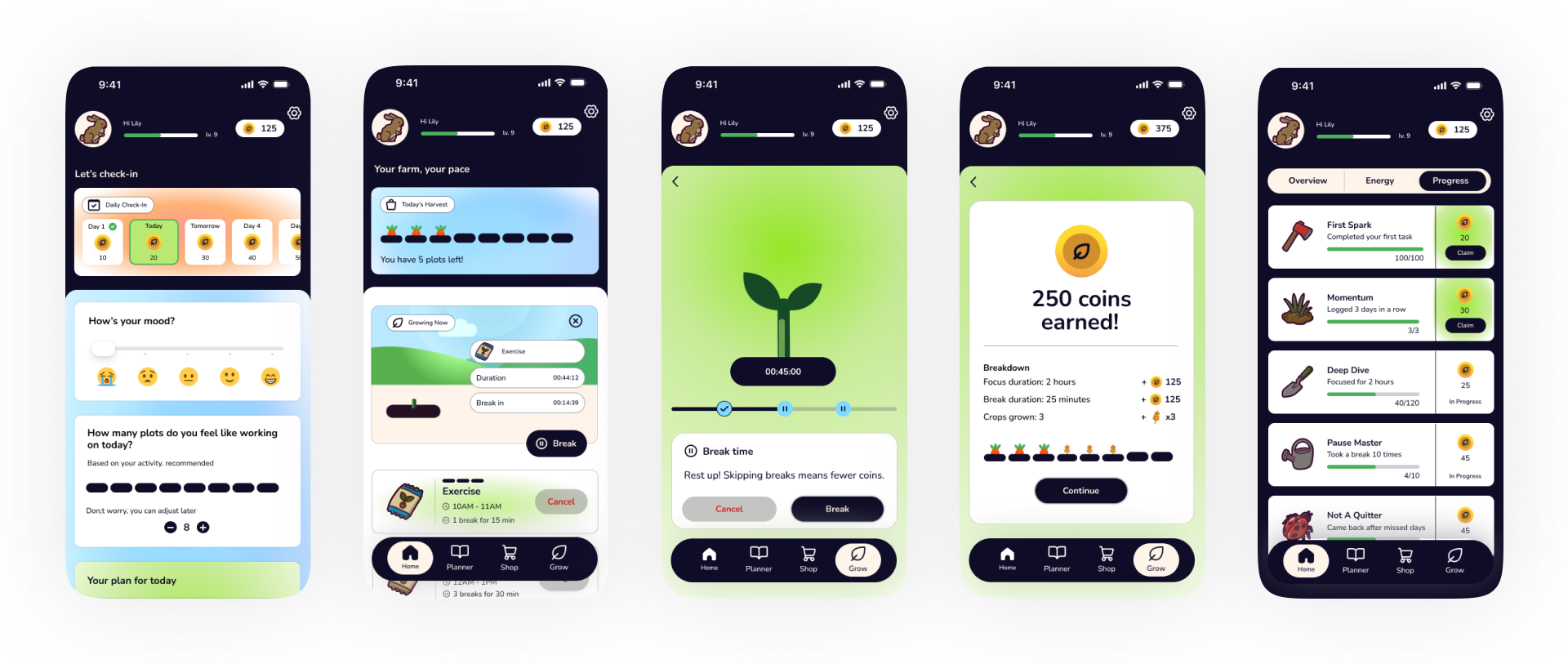
The challenge was making invisible energy tangible enough to manage. A gamified energy management app that transforms spoon theory into a tangible, visual experience. Users allocate their daily energy as "plots" and watch crops grow as they complete tasks—making energy consumption visible and manageable in real-time.
Design Principles
Every design decision returned to a fundamental question: how do you create a system that supports users without adding to their cognitive load? The answer emerged through three guiding principles that shaped the app
Neurodivergent individuals struggle to recognize energy depletion in real-time, making it nearly impossible to pace themselves before hitting burnout.
Accommodate neurodivergent needs
Internal experiences like energy levels must be translated into concrete, visual representations that users can immediately understand and act upon.
Make the abstract visual
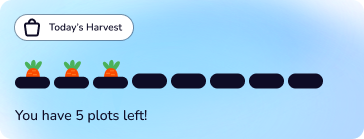
Incorporate goals, feedback, and rewards to boost motivation—but design them to feel supportive rather than demanding. Progress should be celebrated without creating anxiety about falling behind.
Gamify without pressure
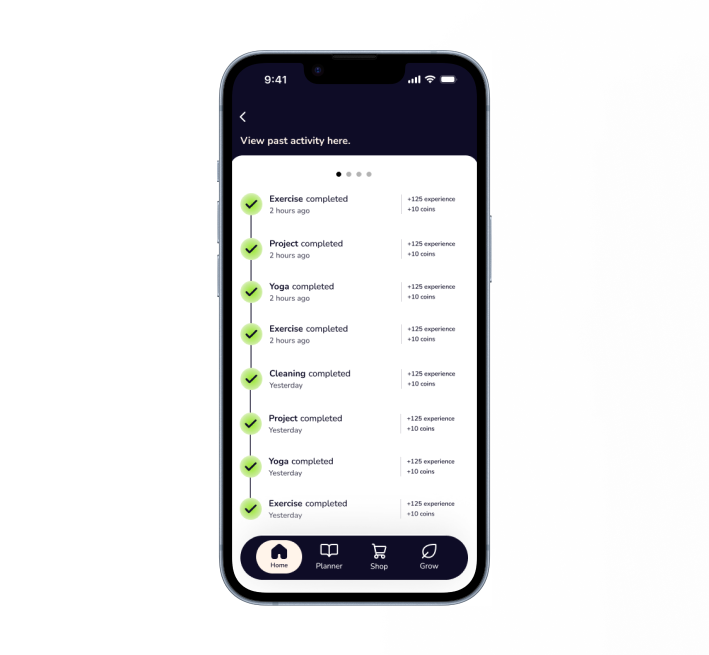
Completed tasks
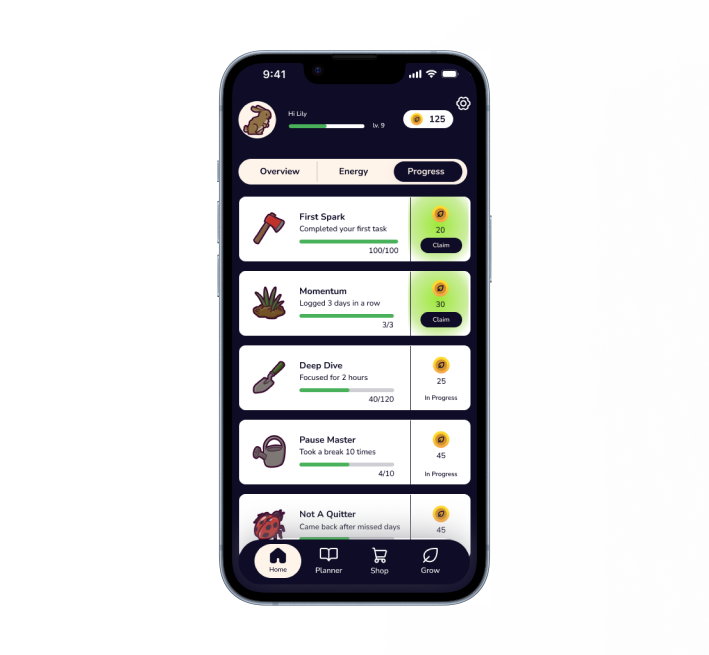
Rewards tab
Neurodivergent individuals often can't see patterns in their behavior until burnout hits.
By visualizing trends like overcommitment or energy dips, users gain self-awareness to adjust proactively. The stats become a mirror, helping them learn their own rhythms instead of fighting against them.
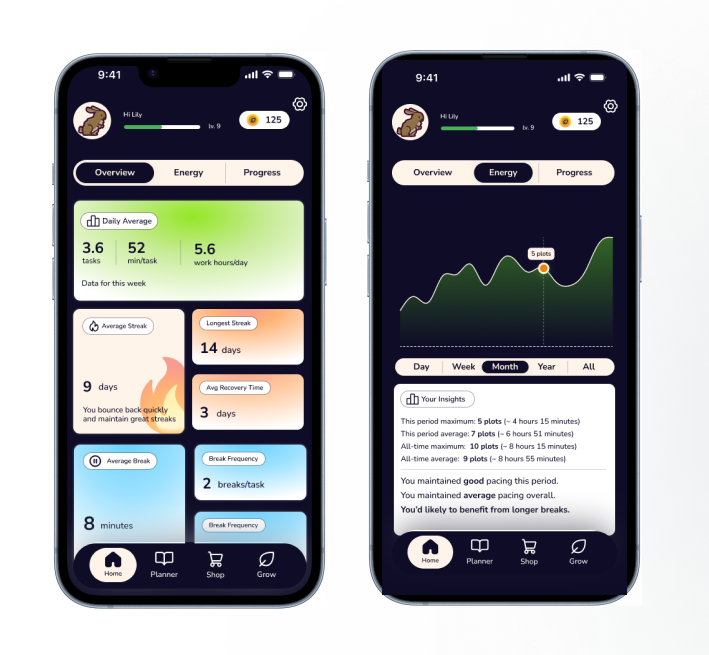
Tracking user’s patterns
Beyond recognizing energy patterns, users need proof of their productivity. A visible task history combats the common "I didn't do anything today" feeling by providing concrete evidence of accomplishments. This builds confidence and helps users see the value of pacing themselves, even when it means completing fewer tasks in a sustainable way.
Gamification only works if progress feels tangible and celebrated. The rewards tab creates a dedicated space for positive reinforcement, giving users a reason to return to the app beyond obligation.
Key Learnings
Working on Plenty was an interesting design challenge: how do you help people slow down and pace their work without pressuring them? The solution required moving away from traditional productivity metrics and embracing a system where slowing down and knowing your limits is a success in itself.